Four Ways to Cancel Broadband Contracts Without Paying Cancellation Fees
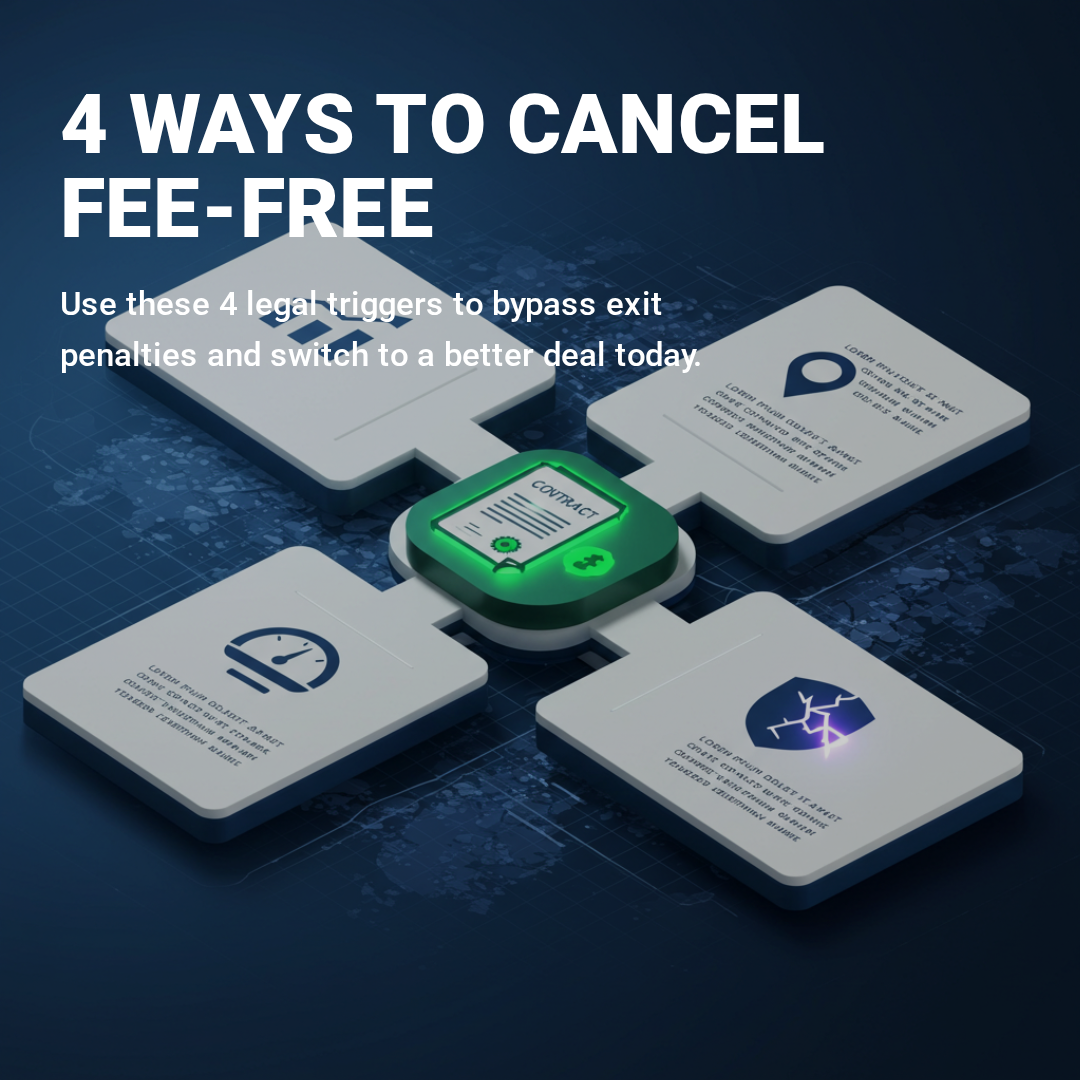
Early exit fees are typically calculated as your monthly cost multiplied by the remaining months on your contract, which can add up to hundreds of pounds if you're mid-contract. However, there are four legitimate ways to cancel your broadband without paying these fees: using your cooling-off period, citing service problems, waiting until your contract ends, or making a valid complaint. This guide explains exactly when you can leave penalty-free and how to avoid unnecessary charges when switching broadband providers in 2026.
Does It Cost Money to Leave a Contract Early?
Yes, most UK broadband providers charge an early exit fee if you cancel before your minimum contract term ends. This fee compensates the provider for the remaining months of revenue they expected to receive from you.
The calculation method varies slightly by provider, but the standard formula is your monthly cost multiplied by the remaining months on your contract, minus VAT and any cost savings the provider makes from your early departure. BT Broadband review subtracts 1% if you pay the full amount upfront. EE broadband review subtracts 4% for lump sum payment. Vodafone broadband review subtracts 2%. Plusnet review subtracts 1%. Sky Broadband review and Virgin Media review typically don't offer discounts for upfront payment.
For bundled services such as broadband and TV, exit fees apply to the entire package, which significantly increases the cost. Virgin Media review exit fees are particularly high for bundles, as the monthly cost includes TV channels, broadband, and sometimes phone services. If you're paying £60 per month for a Virgin bundle with 10 months remaining, your exit fee would be around £600.
Exit fees decrease as you approach the end of your contract. If you have just 1 or 2 months remaining, the fee may be low enough that switching to a better deal saves you money even after paying the penalty. Use a calculator to compare the exit fee against the savings you'd make by switching early versus waiting until your contract ends naturally.
Contract Ending Soon?
Four Ways to Avoid Cancellation Fees
1. Cooling-Off Period
All UK broadband contracts include a mandatory 14-day cooling-off period under Consumer Contracts Regulations 2013. This gives you the right to cancel for any reason within 14 days of service activation or contract signing, whichever is later, and receive a full refund.
Sky Broadband review offers a more generous 31-day cooling-off period for broadband, significantly longer than the standard 14 days offered by BT Broadband review, Virgin Media review, TalkTalk review, and EE broadband review. This extended period gives Sky customers more time to test the service and compare it against alternatives before committing.
The cooling-off period starts from the date your service is activated, not the date you signed the contract. If you order broadband on 1st February but installation isn't completed until 10th February, your 14-day (or 31-day for Sky) cooling-off period starts on 10th February. This is important to track, as missing the deadline by even one day means you're locked into the contract and subject to early exit fees if you want to leave.
You must return all equipment provided by the provider within the cooling-off period, or you'll be charged a non-return fee. EE broadband review charges £110 for an unreturned Smart Hub Pro. Virgin Media review charges up to £50 per device. Sky Broadband review charges £40 to £80 for unreturned Sky Stream pucks or Sky Q boxes. BT Broadband review charges around £50 for unreturned equipment. Make sure you follow the provider's returns instructions carefully to avoid unnecessary charges.
If you signed up in person (for example, in a shop or at a door-to-door sales visit), you technically waive your automatic right to the cooling-off period under some circumstances. However, many providers still offer a goodwill gesture and allow cancellation within the standard period, so it's worth asking. Even if your cancellation is accepted, you'll still need to pay for any portion of the service you've already used, calculated on a pro rata basis.
2. Ongoing Problems with Your Broadband Service
If your broadband speed consistently falls below the guaranteed minimum stated in your contract, you have the right to cancel without penalty. Most major providers are signed up to Ofcom's Voluntary Code of Practice, which commits them to providing minimum download and upload speeds.
Use the broadband speed test to measure your actual speed over several days and at different times. If your speed is significantly below the guaranteed minimum (typically stated in your contract or welcome letter), log a fault with your provider. BT Broadband review allows you to log faults online through your account. Sky Broadband review, TalkTalk review, and Virgin Media review require you to contact customer service by phone or live chat.
Once you've logged a fault, your provider must investigate and attempt to fix the issue. If they can't resolve the problem within 30 days (the standard timeframe under Ofcom's Code of Practice), you can leave penalty-free. This applies even if you're mid-contract, as the provider has failed to deliver the service you paid for.
Keep detailed records of all speed tests, fault reports, and communication with your provider. Note the date, time, and name of any customer service representatives you speak to, and save screenshots of speed test results showing your actual speeds compared to the guaranteed minimum. This evidence is essential if the provider disputes your right to cancel penalty-free.
Some providers may offer a discount or credit to keep your business rather than allowing you to leave. While this may be tempting, consider whether the discount genuinely solves the problem. If your speed issues are caused by infrastructure limitations (such as congestion on your street's cabinet or poor signal strength), a discount won't improve your actual speeds. In this case, switching to a provider with better infrastructure in your area (such as upgrading to Full Fibre FTTP broadband from an altnet provider like Hyperoptic review, Community Fibre review, or Gigaclear review) is usually a better solution.
3. Wait Until the Contract Expires
The simplest way to avoid exit fees is to wait until your contract naturally expires. Once your minimum term ends, you can switch or cancel without penalty, though you'll need to give notice (typically 30 days for most providers).
Ofcom regulations require providers to notify you 10 to 40 days before your contract expires, giving you time to compare best broadband deals UK and decide whether to switch or renegotiate with your current provider. Use the broadband availability checker to see which providers and speeds are available at your address, and read independent broadband reviews to ensure you're choosing a reliable provider.
Providers typically offer the best deals to new customers, so switching when your contract ends can save £20 to £40 per month compared to staying on your current provider's out-of-contract rates. BT Broadband review increases prices by around 14% once you fall out of contract. Virgin Media review bundles can nearly double in price from year one to year two. Sky Broadband review, TalkTalk review, and Vodafone broadband review all increase out-of-contract rates significantly.
If you're happy with your current provider but want a better price, contact their retentions team (sometimes called "loyalty team" or "winback team") and ask for a new deal. Be prepared to negotiate—have details of competitor offers ready, and be willing to switch if they won't match or beat the price. Providers would rather keep you on a discounted rate than lose you entirely, so there's often room for negotiation.
Set a reminder for 30 to 40 days before your contract ends to start shopping for deals. This gives you time to compare options, sign up with a new provider, and arrange installation (if required) before your current contract expires. If you wait until after your contract ends, you'll be paying the higher out-of-contract rate while your new service is being set up.
4. Make a Valid Complaint
If you're genuinely frustrated with your service for reasons beyond just speed (such as repeated outages, poor customer service, billing errors, or misleading sales practices), making a formal complaint can sometimes result in penalty-free cancellation.
Start by contacting your provider's customer service team and clearly explain the issue. Be specific about what's wrong, how long it's been happening, and what you want as a resolution (such as cancellation without fees, a discount, or compensation). Keep your tone professional and factual—emotional complaints are less effective than calm, evidence-based ones.
If the customer service team can't resolve your complaint, escalate to the provider's formal complaints process. All UK providers are required to have a published complaints procedure, typically available on their website or in your contract terms. Follow this process exactly, as it strengthens your case if you later need to escalate to an ombudsman.
If your complaint isn't resolved within 8 weeks, or if you receive a "deadlock letter" (a letter confirming the provider won't resolve the issue to your satisfaction), you can escalate to the relevant ombudsman. Most major providers are registered with either Ombudsman Services or CISAS (Communications and Internet Services Adjudication Scheme). The ombudsman is free to use and can order the provider to cancel your contract without fees, provide compensation, or take other action to resolve the issue.
Complaints based on factual service failures (such as repeated outages, missed engineer appointments, or billing errors) are more likely to succeed than complaints based solely on dissatisfaction with price or a desire to switch to a competitor. If you simply want a better deal and have no other grounds for complaint, you're better off waiting until your contract ends or checking whether you qualify for penalty-free exit under one of the other three methods.
What If I Want to Switch for Another Reason?
If you want to switch because you've found a better deal elsewhere and have no other grounds for penalty-free exit, you'll need to pay the early exit fee unless you can negotiate a buyout with your new provider.
Some providers offer exit fee credit to offset your cancellation costs. BT Broadband review and EE broadband review both offer up to £300, though this is only available if you take certain packages and excludes switches from each other or from Plusnet review (as all three are owned by the same parent company). Sky Broadband review offers up to £100 for broadband-only or up to £200 for broadband and TV bundles. Vodafone broadband review offers up to £200 for Full Fibre FTTP broadband deals, but only £50 for superfast FTTC deals. Hyperoptic review offers up to £300, but only if you take a 1Gbps deal costing at least £25 per month.
Exit fee credit is not the same as the provider paying your exit fee directly. You must pay your current provider first, then submit proof (such as your final bill) to your new provider within a specific timeframe (typically 30 to 60 days after activation). The new provider then credits your account with the equivalent amount, which is applied to your future bills rather than paid to you as cash. This means you need to have the cash available to pay the exit fee upfront.
The maximum amount of credit is capped at the actual exit fee you paid, so if the provider advertises "up to £300" but your exit fee is only £120, you'll receive £120 in credit. Additionally, the credit amount varies by package—cheaper deals typically receive smaller maximum contributions. Check the small print carefully before signing up to ensure the exit fee credit covers your actual costs.
Can I Leave Penalty-Free Due to Mid-Contract Price Rises?
From January 2025 onwards, all UK broadband providers must state fixed-pound price rises (typically £3 to £4 per month) in their terms and conditions, rather than using vague percentage-based increases tied to inflation. This means most mid-contract price rises are now disclosed at the point of sale, so you cannot leave penalty-free when they take effect.
BT Broadband review, EE broadband review, Plusnet review, and TalkTalk review all apply a fixed £4 per month increase each April. Vodafone broadband review applies £3.50 per month. Sky Broadband review varies by package but typically adds £3 to £4 per month. These increases are stated in the contract terms, so agreeing to the contract means you've agreed to the price rise.
However, if your provider introduces a price rise that was not disclosed when you signed up, you have the right to leave penalty-free. You must exercise this right within 30 days of receiving notice of the price change. This is rare in 2026, as Ofcom's new rules require clear disclosure of all mid-contract increases, but it can still happen if a provider changes its pricing policy mid-contract.
Some customers on older contracts (signed before April 2024) may still be on inflation-linked pricing (such as CPI + 3.9%). BT Broadband review is moving these customers to fixed-pound increases from 1st March 2026, which gives affected customers the right to switch before the change takes effect. If you're in this situation, check your email for notifications from your provider and act quickly if you want to switch penalty-free.
Should You Pay an Exit Fee to Switch Early?
Paying an exit fee to switch early can be worthwhile if the savings from your new deal outweigh the cost of the exit fee over the remaining contract term.
For example, if you're paying £50 per month for Virgin Media review broadband and TV with 6 months remaining (£60 exit fee), but you can switch to a Sky Broadband review bundle for £35 per month, you'd save £15 per month. Over 6 months, that's £90 in savings, minus the £60 exit fee, leaving you £30 better off even after paying the penalty. Over 12 months, you'd save £180 minus the £60 exit fee, leaving you £120 better off.
Factor in the new provider's exit fee credit if available. If Sky Broadband review offers £100 exit fee credit and your Virgin Media review exit fee is £60, you'd effectively switch for free and receive £40 in bill credit towards your Sky service. This makes switching mid-contract a no-brainer if the new deal is genuinely better.
However, don't forget to account for setup costs and installation fees. Some providers charge £30 to £50 for installation, particularly for Full Fibre FTTP broadband requiring engineer visits. Add this to the exit fee when calculating the true cost of switching. Many providers waive setup fees for new customers, so shop around for deals that include free installation and exit fee credit to minimize your upfront costs.
Contract Ending Soon?
Tell us when your broadband contract ends and we'll email you the best deals available at your address, so you can switch penalty-free.