Can I Keep My Landline When Switching Broadband Provider?
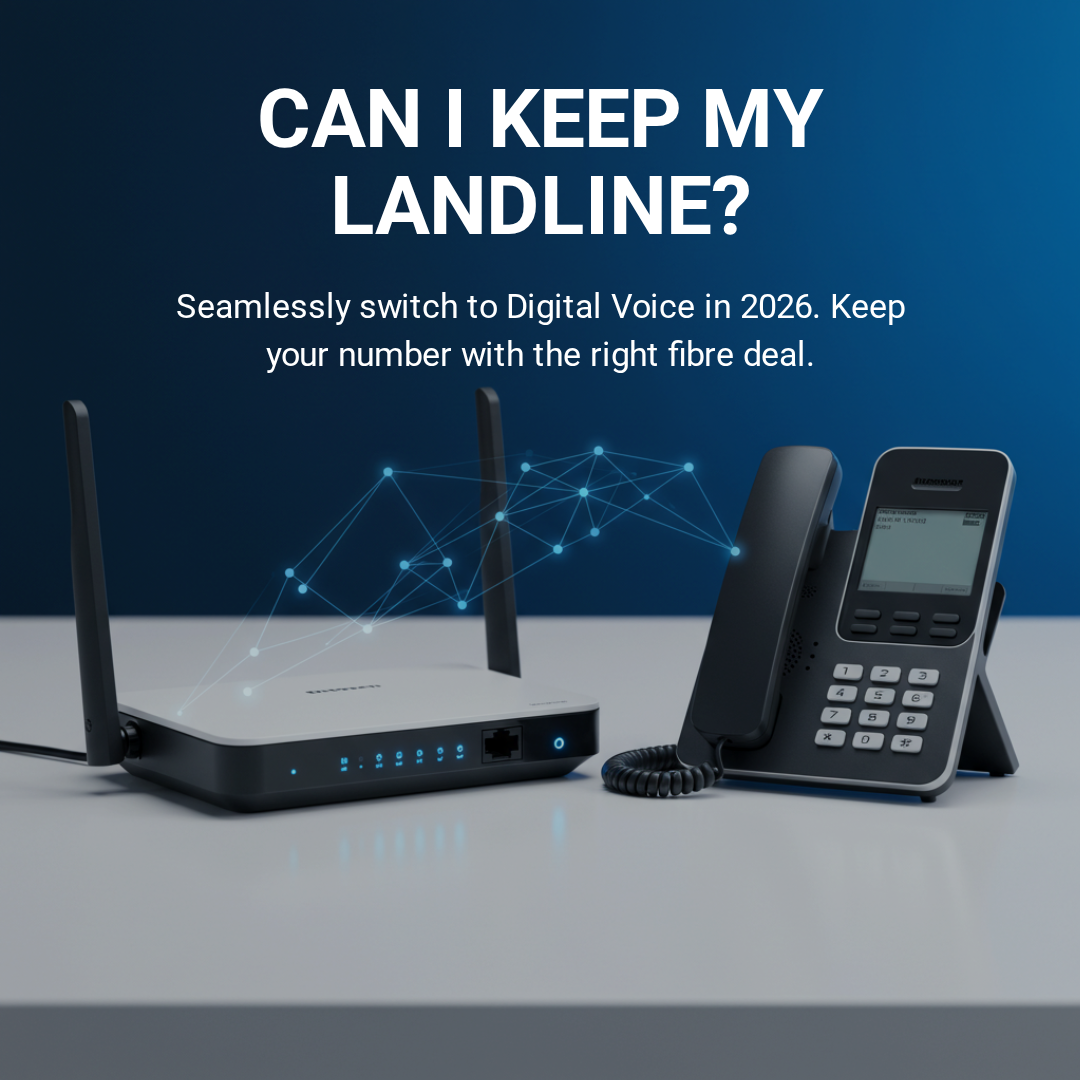
Yes, you can keep your landline number when switching broadband providers through a process called number porting. Ofcom regulations require your current provider to allow you to transfer your number, and most new providers will accept the request. However, the UK digital voice switch-over to digital phone lines (completing in January 2027) means traditional copper landlines are being phased out, so your landline will work differently even if you keep the same number.
How Do I Keep My Number When Switching Broadband?
Number porting is the process of transferring your existing landline number to a new provider. When you sign up with your new broadband provider, ask their customer service team to port your number during the switch. They handle all the technical work behind the scenes, so you don't need to contact your old provider separately.
Under One Touch Switch rules (introduced in September 2024), your new provider manages the entire broadband switch, including cancelling your old service. Number porting is processed at the same time, so your landline number transfers automatically when your broadband goes live. The process typically takes 10 to 14 working days for standard switches, though Full Fibre FTTP broadband installations may take longer if engineering work is required.
Make sure you provide your new provider with the exact landline number you want to keep. The number must be active on your current account at the time of the switch—if you've already cancelled your old service, the number may no longer be portable. Keep your old service active until your new broadband and landline are confirmed working to avoid losing the number.
Contract Ending Soon?
Is There a Cost to Keep My Landline?
No. Number porting is free when switching broadband providers. Your new provider will not charge extra to transfer your number, and it's included as part of the standard switch process. However, you'll still pay the monthly cost of your new broadband and landline package, which varies by provider.
BT Broadband review includes Digital Voice (the new digital landline service) free with all broadband plans, though you'll pay for call charges unless you add a calls package. Sky Broadband review includes free weekend calls to UK landlines and mobiles with all packages. TalkTalk review and Plusnet review charge extra for landline call packages, typically £5 to £10 per month for unlimited UK calls. Virgin Media review includes free UK landline and mobile calls with all broadband plans.
If you're mid-contract with your current provider, you may need to pay an early exit fee to leave before your contract ends. This fee is typically your remaining monthly cost multiplied by the months left on your contract. Number porting itself is free, but the exit fee for cancelling your old service early can be significant.
Can I Keep the Same Number When Switching Broadband?
Yes, you can keep the same number when switching broadband providers in most situations. Your new provider will arrange the entire transfer, and you don't need to contact your current provider separately.
However, there are two scenarios where you may not be able to keep your number. First, if you're moving to a different geographic area with a different telephone exchange, you'll likely need a new number with the new area code. For example, moving from London (020) to Manchester (0161) means your London landline number cannot be ported, as it's tied to the London exchange. If you're staying in the same area or moving within the same exchange area, you can usually keep your number.
Second, if you're switching from a traditional copper landline to a provider that doesn't support landlines, you may lose the number. Most major providers such as BT Broadband review, Sky Broadband review, TalkTalk review, Virgin Media review, and Vodafone broadband review all support digital landlines, so this is rarely an issue. Smaller providers or mobile broadband-only services may not offer landline porting, so check before signing up.
What Happens to My Landline During the PSTN Switch-Off?
The UK digital voice switch-over (formerly the PSTN switch-off) is phasing out traditional copper landlines by January 2027. This means all landline calls will be delivered over broadband using digital voice technology (also called VoIP or Voice over Internet Protocol) rather than the old copper wires.
Your landline number can still be kept and ported, but the way it works is changing. Instead of plugging your phone into a wall socket, you'll plug it into your broadband router. Most modern routers include a phone port for this purpose. BT Broadband review calls this service Digital Voice, Sky Broadband review calls it Sky Talk, and Virgin Media review calls it Virgin Phone. The service is the same—your landline runs over your broadband connection rather than a separate copper line.
Digital voice offers several advantages over traditional landlines. Call quality is clearer, as digital connections carry voice with higher fidelity than analogue copper lines. You can use advanced features such as call forwarding to your mobile phone, spam call blocking, and three-way conference calling. If your broadband goes down, most providers offer call diversion to a mobile phone so you don't lose access to your landline number during outages.
Over two-thirds of UK landlines have already been upgraded to digital voice as of early 2026. If you're switching broadband providers now, your new service will almost certainly use digital voice rather than a traditional copper landline. Your number can still be ported, and the process is the same—your new provider handles the transfer when you switch.
What Are the Alternatives If I Can't Keep My Broadband with Landline?
If you can't keep your landline number (for example, if you're moving to a different area code or your new provider doesn't support landlines), you have several options.
First, consider whether you actually need a landline. Many households now rely entirely on mobile phones and no longer use landlines for calls. If you only use your landline for receiving calls from family or businesses, you can update your contact details with everyone and stop using the landline entirely. This saves £5 to £10 per month on landline call packages and simplifies your broadband setup.
Second, if you need a landline for specific purposes (such as telecare devices, security alarms, or businesses that require a geographic number), check whether your devices are compatible with digital voice services. Most modern equipment works with digital voice, but older devices may require adapters or replacement. Contact your device manufacturer or service provider to confirm compatibility before switching.
Third, if you're moving to a different area and can't port your number, you can forward calls from your old number to your new number or mobile phone for a temporary period. Some providers offer call forwarding as a paid service, typically £5 to £10 per month. This gives you time to update your contact details with everyone before you cancel the old number permanently.
Finally, if you don't want a landline at all, switch to a broadband-only plan. Full Fibre FTTP broadband is now available to nearly 90% of UK premises, with prices starting from £25 to £30 per month for 150Mbps to 500Mbps speeds. Broadband-only plans are typically £5 to £10 per month cheaper than broadband with a landline, and you won't need to worry about porting numbers or maintaining a phone service you don't use.
Do I Need to Tell My Old Provider I'm Switching?
No. Under One Touch Switch rules (introduced in September 2024), you don't need to contact your old provider when switching broadband providers. Your new provider manages the entire switch, including cancelling your old service and porting your landline number. This applies to switches within the same network (such as from BT Broadband review to Plusnet review, both on the Openreach network) and cross-network switches (such as from Sky Broadband review to Virgin Media review).
Simply sign up with your new provider and ask them to port your landline number during the switch. They'll contact your old provider on your behalf and arrange the transfer. Your old service will be cancelled automatically when your new service goes live, so you won't be charged by both providers at the same time.
If you're mid-contract, your old provider will send you a final bill including any early exit fees. Pay this promptly to avoid credit issues. If your new provider offers exit fee credit, submit proof of payment (such as your final bill) to claim the reimbursement.
Can I Port My Landline to a Mobile Phone?
Yes, you can port your landline number to a mobile phone if you no longer want a landline service. This is useful if you're ditching your landline entirely but want to keep the same number for family, friends, or business contacts.
Landline-to-mobile porting is offered by most major mobile networks, including EE, Vodafone, O2, and Three. The process typically takes 1 to 2 weeks and is free, though you'll need to pay your mobile network's standard monthly fee for calls and data. Once the number is ported to your mobile, you can cancel your broadband landline service entirely or switch to a broadband-only plan.
This option is particularly useful if you're moving abroad or no longer need a fixed-line phone at home. Porting your landline to a mobile means you can keep the number active and receive calls wherever you are, without maintaining a separate landline service.
What Providers Offer Landline Number Porting in 2026?
All major UK broadband providers support landline number porting, as Ofcom regulations require them to allow number transfers.
BT Broadband review, Sky Broadband review, TalkTalk review, Plusnet review, EE broadband review, and Vodafone broadband review all support number porting as part of their standard switch process. These providers all operate on the Openreach network, so switches between them are fast and seamless, typically completing within 10 to 14 working days.
Virgin Media review also supports number porting, though switches to or from Virgin can take slightly longer, as Virgin operates its own cable network rather than using Openreach infrastructure. Virgin-to-Openreach switches (or vice versa) are cross-network switches, which can involve several hours of downtime and may require an engineer visit.
Altnet providers such as Hyperoptic review, Community Fibre review, Gigaclear review, and CityFibre network explained all support landline number porting, though availability varies by region. Check the broadband availability checker to confirm which providers operate at your address before signing up.
Should You Keep Your Landline in 2026?
Whether you should keep your landline depends on how you use it. If you rely on your landline for regular calls, have family or business contacts who call you on it, or need it for devices such as telecare alarms or security systems, keeping the number when you switch makes sense. Number porting is free and automatic when you switch providers, so there's no reason to give up the number unless you're moving to a different area code.
However, if you rarely use your landline and only keep it because it's bundled with broadband, consider switching to a broadband-only plan. Full Fibre FTTP broadband without a landline is typically £5 to £10 per month cheaper than broadband with a landline, and you won't need to worry about call packages or maintaining a phone service you don't use.
If you're unsure, check your landline usage over the past few months. Most providers show call logs in your online account. If you make or receive fewer than 5 calls per month, you probably don't need a landline and can save money by switching to broadband-only.
Contract Ending Soon?
Tell us when your broadband contract ends and we'll email you the best deals available at your address, so you can switch penalty-free.